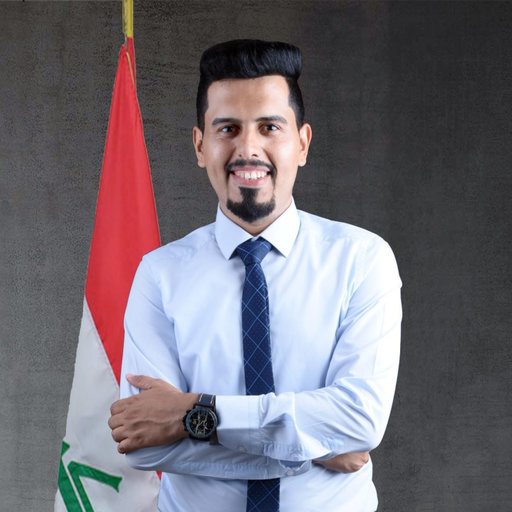
Comprehensive Professional Analysis
Comprehensive Professional and Academic Analysis
Saif Aldeen Saad Obayes Al-Kadhim: IEEE Leadership, Research Innovation, and Global Technical Advocacy
The professional trajectory of Saif Aldeen Saad Obayes Al-Kadhim represents a significant synthesis of academic rigor, strategic institutional leadership, and pioneering research within the global engineering community. As a Senior Member of the Institute of Electrical and Electronics Engineers (IEEE), Al-Kadhim has transitioned from a foundational focus on electrical power systems in the Middle East to becoming a key architect of international standards in blockchain technology and a lead researcher in Micro-Electro-Mechanical Systems (MEMS) at some of the world’s most prestigious technical institutions. His career is defined not only by the quantity of his technical output—exceeding 137 publications—but also by his role as a bridge between industrial application and theoretical advancement, particularly in the realms of the Internet of Things (IoT), sensor intelligent systems, and decentralized governance frameworks.
Theoretical Foundation and Academic Progression
The academic evolution of Saif Aldeen Saad Obayes Al-Kadhim reflects a deliberate and strategic expansion of technical scope, moving from the macro-scale complexities of electrical power grids to the micro-scale precision of nanotechnology. This progression is rooted in the Iraqi educational system, specifically within the historic academic hubs of Babylon and Baghdad, before extending into the high-technology research environment of Xi’an, China.
Hierarchical Educational Development
| Academic Degree | Field of Specialization | University / Institution | Completion Date |
|---|---|---|---|
| Bachelor of Science (B.Sc.) | Electrical Engineering | University of Babylon, Iraq | July 2006 |
| Higher Diploma (H.D.) | Power System Technology | College of Electrical and Electronic Technology, MTU | March 2011 |
| Master of Science (M.Sc.) | Electro-Mechanical System Engineering | University of Technology, Baghdad | October 2016 |
| Doctor of Philosophy (Ph.D.) | Electrical Engineering | Xi’an Jiaotong University, China | March 2025 |
Initial research during the Higher Diploma at Middle Technical University focused on the “Simulation of Multi-Machine Transient Stability,” a critical area for ensuring the reliability of large-scale power networks. This foundational understanding of system stability served as a prerequisite for later work in automated manufacturing and smart grids.
By the Master of Science program at the University of Technology, the focus shifted toward the integration of digital control and mechanical hardware, culminating in the dissertation titled “Application of Computer Numerical Control Machine Based on Internet of Things System”. This research successfully demonstrated the feasibility of utilizing low-cost microcontrollers, such as Raspberry Pi and Arduino, to manage complex industrial machining tasks via wireless protocols—a theme that would recur throughout the professional career.
Institutional Affiliations and Departmental Leadership
Beyond student status, Al-Kadhim has occupied various senior academic and administrative roles within the Iraqi technical education sector. The affiliation with Al-Furat Al-Awsat Technical University (ATU), specifically within the Engineering Technical College in Najaf, highlights a role in shaping the next generation of engineers in the Department of Laser and Electro-optics Technologies Engineering.
Furthermore, tenure as Research Associate and Head of Department at the University of Technology in Baghdad between 2015 and 2020 underscores a period of high administrative responsibility, balancing institutional management with active research in electromechanical systems.
Strategic Leadership within the IEEE and Global Standards Development
Al-Kadhim’s engagement with the IEEE is characterized by a rare combination of volunteer advocacy and technical governance. Elevation to the grade of Senior Member—a distinction reserved for those who have demonstrated significant performance over at least ten years of professional practice—reflects standing as an expert within the international engineering community.
Governance of Blockchain Standards: IEEE P2418.11
Perhaps the most significant current professional responsibility is the leadership role in the IEEE Standards Association (IEEE SA). Serving as Vice Chair of the Working Group for IEEE P2418.11, the “Standard for Framework of Blockchain-based Physical Digital Assets”, this standard is at the vanguard of modern technological governance, addressing the critical need for secure, transparent, and verifiable e-Voting systems.
The technical scope of the P2418.11 standard, managed by the working group under the leadership of Chair John Wnuk and Vice Chair Al-Kadhim, involves several layers of innovation:
Security via Distributed Ledger Technology (DLT): The framework specifies the application of blockchain to safeguard voter registration and the casting of ballots, ensuring that digital records are immutable and resistant to unauthorized modification.
Real-Time Procedural Auditing: A core requirement is the implementation of a real-time audit trail, which allows for the immediate detection and resolution of suspicious activities during a voting event, thereby enhancing the integrity of the democratic process.
Synthesis and Verifiability: The standard provides guidelines for the secure aggregation and summary of results, ensuring that the final output of a physical digital asset transaction (in this case, a vote) is technically sound and publicly verifiable.
The move into blockchain standards represents a significant “third-order insight” into the career trajectory: successfully migrating expertise from the physical security of electromechanical systems to the digital security of social and governmental infrastructures. This transition mirrors the global engineering shift toward the “Cyber-Physical System” (CPS) paradigm, where hardware and software are inextricably linked.
Ambassadorial Recognition and Volunteer Excellence
In addition to standards work, Al-Kadhim has been a primary public face for the IEEE in the Middle East and North Africa (MENA) region. Contributions were formally recognized in 2022 through a series of high-profile ambassadorial appointments and subsequent awards:
IEEE PES Day 2022 Best Ambassador: The IEEE Power & Energy Society (PES) awarded the title of “Best Ambassador” for exceptional leadership during the 2022 PES Day celebrations. This role involved organizing high-quality events aimed at promoting clean energy and smart grid technologies, aligning with the global theme of “Clean Energy, Smarter Grids, Better Lives”.
IEEE Day 2022 Ambassador: Served as the official ambassador for the broader IEEE Day festivities, representing the organization’s mission to celebrate the first time IEEE members gathered to share technical ideas in 1884.
Marketing and Communication Leadership: Influence within the society continues through the role as Content Writer for the Marketing & Communication Subcommittee of the IEEE PES Young Professionals, shaping the messaging and outreach strategies for early-career engineers worldwide.
These roles demonstrate a capacity for organizational leadership that complements technical expertise. Work as an ambassador likely involved significant cross-border coordination, public speaking, and technical journalism, further solidifying reputation as a “T-shaped” professional with both deep technical knowledge and broad soft skills.
Technical Research Corpus: Sensors, Nanotechnology, and MEMS
The core technical contribution lies in research into advanced sensing technologies. Recent work at Xi’an Jiaotong University focuses on the intersection of MEMS fabrication and nanomaterial science, with particular emphasis on ionization-based sensors for safety and environmental monitoring.
Innovation in Ionization Sensing and Aerosol Detection
As lithium-ion battery technology becomes the cornerstone of the global energy transition, particularly in the automotive and aerospace sectors, the need for early-stage failure detection (thermal runaway) has become critical. Al-Kadhim’s research addresses this challenge through the development of high-sensitivity ionization aerosol sensors.
| Research Focus | Publication / Context | Key Findings / Innovations |
|---|---|---|
| Lithium-Ion Battery Safety | Sensors and Actuators A: Physical (2025) | Development of flexible materials for ionization-based aerosol sensors to monitor battery safety |
| Three-Electrode Structure | Sensors and Actuators A: Physical (2025) | Optimization of particle sensors through a triple-electrode design, improving detection range and response time |
| UHV Transmission Systems | APEC Conference (2024) | Application of MEMS ionization sensors for real-time detection of transient overvoltage in ultra-high voltage systems |
| Flue Gas Emission | Sensors and Actuators B: Chemical (2025) | Study on response characteristics of ionized particle sensor arrays for industrial emission monitoring |
The innovation in the three-electrode design is particularly noteworthy. Traditional ionization sensors often struggle with narrow detection ranges and sensitivity to environmental fluctuations. Al-Kadhim’s work demonstrates that by utilizing a silicon strip as a substrate for Carbon Nanotube (CNT) growth and implementing a third electrode to regulate the electric field, it is possible to achieve far more precise electron distribution and ion concentration control. This allows for the detection of trace aerosols and gases that would be invisible to conventional sensors.
Carbon Nanotubes and High-Precision Humidity Sensing
The integration of carbon nanotubes into sensor architecture represents another significant pillar of research. In a 2024 study titled “Enhanced humidity sensing performance of a triple-electrode ionization sensor utilizing carbon nanotubes,” Al-Kadhim and the team introduced a novel design aimed at achieving extreme sensitivities.
The technical parameters of this CNT-based sensor are indicative of its potential impact:
- Sensitivity: 381.67 %RH⁻¹ in nitrogen and 11.83 %RH⁻¹ in air
- Detection Range: 25.8% RH to 100% RH in nitrogen and 30% RH to 100% RH in air
- Dynamics: A response time of 11 seconds and a recovery time of 5 seconds, significantly faster than many traditional capacitive or resistive humidity sensors
The physics of this sensor rely on the large surface area and exceptional adsorption properties of CNTs, which attract water molecules efficiently. When combined with the ionization principle, the sensor leverages the exponential relationship between collecting current and relative humidity to provide superior performance across diverse environments—from food processing and storage to healthcare and electronic manufacturing.
Industrial Applications: IoT, CNC, and Smart Manufacturing
Prior to the focus on micro-nano fabrication, a significant portion of the career was spent developing applied solutions for industrial automation. This work was primarily centered on the “Workshop of the Future” concept, where traditional mechanical tools are augmented with IoT capabilities.
Wireless Controller Systems and CAD/CAM Integration
In 2017, research was published on a “Prototype Wireless Controller System based on Raspberry Pi and Arduino for Engraving Machine,” presented at the UKSim-AMSS 19th International Conference on Modelling & Simulation. This project was more than just a hardware build; it involved the integration of wireless communication with NC (Numerical Control) data generated from CAD/CAM systems.
The system allowed for:
- Remote Operation: Enabling machine tools to be controlled wirelessly, reducing the need for physical cabling in hazardous or space-constrained workshop environments
- Cost-Effective Automation: Using affordable components like Raspberry Pi to perform tasks that previously required expensive, proprietary industrial controllers
- IoT Management: Extending the “perception layer” of the manufacturing environment by using sensors to process and send data to a centralized monitoring system
This line of research culminated in the book “Industrial Workshop Based on Internet of Things: Automated Manufacturing Systems Technology,” published by Noor Publishing in August 2017. This publication serves as a comprehensive guide for integrating IoT concepts—such as the Bezier technique for surface modeling—into practical industrial workflows.
IoT Case Studies in Infrastructure and Energy
IoT expertise has also been applied to large-scale infrastructure projects. A notable case study published in the Journal of Physics: Conference Series (2021) detailed an “IoT Management Solution” for monitoring the fill levels of gravel silos. This project addressed a common logistical challenge in construction: the real-time tracking of raw materials. By implementing a sensor-based monitoring system, the project demonstrated how digital oversight could reduce waste and optimize supply chain timing.
Furthermore, involvement in the “Shaanxi Province New Energy Power Equipment Status Evaluation” (2022–2026) shows the application of IoT and AI for the predictive maintenance of power equipment. This involves using sensory data to evaluate the health of power systems, identifying potential failures before they occur—a critical capability for the resilience of modern energy grids.
Industrial Experience and Professional History
Professional life is a testament to the “Pracademic” model, where industrial experience informs academic research and vice versa. Work history spans various sectors, including electronic manufacturing, government project management, and high-level technical consultancy.
Chronological Professional Trajectory
| Period | Organization | Role | Impact / Key Contributions |
|---|---|---|---|
| 2012–2015 | Al Bader Electronic Industries, Iraq | IC Design Engineer | Designed over 50 PCB layouts for industrial applications; reduced production costs by 15% |
| 2015–2020 | University of Technology, Baghdad | Head of Dept. / Research Assoc. | Led departmental research in electromechanical engineering |
| 2017–2020 | Shiite Endowments Diwan, Iraq | Project Manager / Senior Researcher | Managed construction and technical projects with a total budget of $5M |
| 2020–2025 | Xi’an Jiaotong University, China | Ph.D. Researcher (MEMS) | Lead researcher on multiple high-sensitivity sensor projects |
| 2025–Present | Research & Academic Engagement | Senior IEEE Member / Consultant | Based in Budapest, Hungary; focuses on global technical standards |
During time at Al Bader Electronic Industries, a deep proficiency was developed in Integrated Circuit (IC) design, specifically utilizing Altium Designer and Eagle for high-speed and multi-layer PCB layouts. This industrial foundation provided the practical insights necessary to transition into MEMS fabrication, where the principles of circuit design are scaled down to the micro and nano levels.
The role at the Shiite Endowments Diwan involved a significant shift into project management and risk assessment. Managing a $5M budget required a sophisticated understanding of technical documentation, government coordination, and large-scale project execution. This phase of the career likely honed the leadership skills that would later prove effective as Vice Chair for IEEE standards working groups.
Engineering Workflow and Technological Integration
A defining characteristic of recent professional output is the use of cutting-edge design and research tools. The workflow reflects the modern engineer’s reliance on AI-assisted platforms and automated systems.
Advanced Design and Simulation Tools
Technical records indicate utilization of a highly sophisticated stack of software and hardware tools to execute research and design projects:
PCB Design and Generative Layout: Use of Flux.ai and DeepPCB indicates engagement with AI-driven circuit design. Work on the “Chamber Monitor AI” and “ESPRSSO32 Smart Scale AI” utilized these platforms for auto-layout and cost analysis, showing a 27% reduction in component costs for certain STM32F103-based projects.
Generative Design: The adoption of Quilter—a generative design tool for PCBs—further emphasizes the move toward AI-optimized hardware development.
Simulation and Modeling: For antenna and sensor research, extensive use of Computer Simulation Technology (CST) software and MATLAB/Simulink. Research on “Microstrip Grid Antenna Arrays for 5G Mobile Devices” (2018) relied on CST for optimizing performance at the 28 GHz frequency band.
Research and Analysis: Utilization of NotebookLM for synthesizing dense research materials and DataCamp for continuous upskilling in Python and data science.
Programming and Development
The digital portfolio, as evidenced by GitHub repositories, shows a proficient coder capable of developing custom tools for the academic community. One notable project is the “Academic-Researcher-Matching-AI-Agent,” a Deno-based application designed to facilitate collaboration between researchers. Language skills in JavaScript (39.2%), HTML (21.8%), and Python (4.5%) provide the software backbone for hardware-centric research.
Diverse IEEE Society and Council Memberships
The breadth of involvement in the IEEE is reflected in participation in nearly a dozen different societies and councils. Each membership aligns with a specific facet of multidisciplinary research:
| IEEE Entity | Relevance to Career |
|---|---|
| Power & Energy Society (PES) | Foundational focus on power system stability and transient analysis |
| Industrial Electronics Society (IES) | Core of work in IoT workshops and automated manufacturing |
| Robotics and Automation Society (RAS) | Development of CNC wireless controllers and engraving machine automation |
| Standards Association (SA) | Active leadership in blockchain (P2418.11) and e-voting frameworks |
| Electronic Device Society (EDS) | Focus on MEMS fabrication and the physics of ionization sensors |
| Sensors Council | Primary outlet for research into high-sensitivity aerosol and humidity sensors |
| Nanotechnology Council | Application of carbon nanotubes and Si micropillars in sensor design |
| Biometrics Council | Integration of sensing technology into secure identification and e-voting systems |
| Systems Council | Oversight of complex electromechanical and cyber-physical systems |
| Young Professionals (YP) | Mentorship and technical communication for the next generation of engineers |
This wide range of affiliations suggests a “systems thinking” approach. By participating in both the Nanotechnology Council and the Biometrics Council, for instance, it becomes possible to understand how molecular-level innovations can impact high-level societal security—a perspective that is essential for work on e-voting standards.
Strategic Impact on Regional and Global Technical Capacity
The career has substantial implications for the development of technical capacity both in Iraq and within the global IEEE framework.
Development of the Iraqi Engineering Workforce
As a senior academic at the University of Technology and Al-Furat Al-Awsat Technical University, a central role has been played in modernizing engineering curricula in Iraq. Technical reports, often written in accessible language for nonelectrical engineers and technicians, serve as vital educational resources.
Specific educational contributions include:
- Technical Literacy: Authoring reports on “Triac Structure,” “Three-Phase Induction Motors,” and “LDR Light Sensors” to provide foundational knowledge for local industry
- Modernization of Facilities: Research into IoT-based workshops provided a roadmap for Iraqi industries to upgrade their manufacturing capabilities using low-cost, open-source hardware
- Institutional Representation: By serving as Head of Department and representing Iraqi universities at international conferences in Japan, Greece, and Morocco, the global visibility of the Iraqi academic community has been enhanced
Advocacy for the MENA Region in IEEE
As an IEEE PES Day and IEEE Day Ambassador, successful advocacy for increased institutional support for the Middle East has been achieved. Recognition as “Best Ambassador” was not merely a personal achievement; it signaled the rising importance of the MENA region in the global energy dialogue. Work ensures that the challenges and opportunities unique to the region—such as the integration of solar power into legacy grids and the transition to smart cities in desert environments—are reflected in the IEEE’s global agenda.
Synthesis of Achievements and Future Research Directions
A holistic review of available research materials reveals Saif Aldeen Saad Obayes Al-Kadhim to be an engineer of exceptional versatility and impact. Work successfully navigates the entire technological stack, from the fundamental physics of nanomaterials to the global governance of digital assets.
Core Strategic Insights
The Convergence of Sensors and Blockchain: Uniquely positioned to address the security of the “Physical-to-Digital” bridge. As sensors (research focus) collect data for blockchain-based assets (standards focus), dual expertise ensures that the entire pipeline is technically sound and secure.
Scalable Industrial Automation: Early work in IoT-enabled CNC machining demonstrated that high-end industrial capabilities could be achieved through the clever application of low-cost electronics—a principle that is essential for the democratization of manufacturing in developing economies.
Safety in the Green Energy Transition: By focusing on lithium-ion battery safety and UHV transmission monitoring, research addresses the “hidden” technical risks of the renewable energy shift, making this a critical contribution to the reliability of future power systems.
Future Outlook and Projected Contributions
As the Ph.D. at Xi’an Jiaotong University is completed and leadership within the IEEE Standards Association continues, future contributions are likely to center on three areas:
Standardization of Secure e-Voting: The finalization and publication of P2418.11 will likely serve as a foundational document for the next generation of secure elections worldwide, particularly in countries seeking to leverage blockchain for transparency.
Commercialization of MEMS Ionization Sensors: Given the high sensitivity and rapid response times of CNT-based sensors, there is significant potential for these technologies to be commercialized for use in electric vehicles, smart homes, and industrial safety systems.
AI-Driven Hardware Development: Early adoption of Flux.ai, DeepPCB, and Quilter suggests continued leadership in integrating AI into the engineering design process, potentially developing new methodologies for “automated engineering.”
Conclusion
In conclusion, Saif Aldeen Saad Obayes Al-Kadhim exemplifies the modern IEEE Senior Member: a professional who is equally adept at conducting high-impact laboratory research, managing large-scale projects, and leading the development of international technical standards. The career serves as a bridge between diverse engineering disciplines and geographic regions, consistently advancing technology for the benefit of humanity.